Because there are different forms of eczema, each form of eczema requires a different treatment mmc sgd. Do you suffer from eczema? Then consult your doctor. He can advise you on the correct treatment and possibly prescribe medication. Read more about the treatment of atopic eczema , the treatment of dyshidrotic eczema and the treatment of seborrheic eczema . Do you only have mild complaints? The following tips can already help you, https://www.mmc33.net/sg/en-us/:
Avoid scratching
If you have an itch, you prefer to scratch until the itch disappears. Fight this urge! By scratching, you actually maintain the eczema or even make it worse. If you are very distracted by the itch, you can ask your doctor or pharmacy for an anti-itch remedy.
Nourish your skin
If you have eczema, your skin loses more moisture and contains fewer fats. Prevent your skin from drying out and apply yourself every day with a hypoallergenic and perfume-free care product. This is especially important after a shower, bath or dip in the pool. Another good time is before you go to sleep so that the nutrients can absorb into your skin. Leave skin products containing alcohol and scented shower cream on the left.
Reduce stress
Stress can make eczema worse. Therefore, ensure sufficient relaxation, rest and exercise.
Wear cotton
Wool or synthetic materials such as polyester can cause skin irritation. Try to wear clothes that are airy and non-irritating, such as cotton and linen. This also applies to your bedding.
Shower after exercise
Sweat that dries on your skin worsens eczema. Therefore, rinse immediately after exercise under a lukewarm shower.
Find the sun
Sunlight often helps against eczema. Make sure you apply yourself well with sunscreen. Also avoid too bright sun, because this will dry out your skin.
Take care with soap
Soap degreases your skin, making you more sensitive to eczema. There are more and more neutral soaps for sale that have been dermatologically tested and prevent skin irritation. So limit your soap use or get a neutral soap at home.
Do you have a question or would you like personal advice? Then visit the nearest Amazing Guyana store . Whatever your question, we are there for you.
In the USA we prefer to take in every ray of sunshine. What we unfortunately sometimes want to forget is to smear ourselves with sunscreen. And that while the sun can be extremely harmful. Therefore, it is necessary to protect yourself from the sun. But which protection factor do you need? And how often should you apply yourself? We tell you everything you need to know about sunburn.
Why is it important to apply?
Applying yourself with sunscreen from head to toe can be a time-consuming and tedious task. Once you have applied the lubrication, you often have to wait until the sunscreen has retracted properly. Nevertheless, it is necessary to protect your skin from the sun. This way you prevent premature skin aging and you reduce the risk of skin cancer.
Prevent premature skin aging
Exposure to sunlight can promote premature skin aging. Do you want to delay wrinkles and spots for as long as possible? Then protect your skin from the sun every day. Make yourself comfortable by using a day cream with SPF. This way you hydrate your skin and you are protected from the sun every day
Reduce the risk of skin cancer
Skin cancer is the most common cancer in the Netherlands. More than sixty thousand people get skin cancer every year. Unprotected and excessive exposure to sunlight increases the risk of skin cancer. The more you burn, the greater the risk of skin cancer. That is why it is necessary to apply it well if you expose your skin to sunlight.
Sun rays consist of UVA and UVB rays. The ‘A’ in UVA stands for ‘aging’. UVA radiation is the culprit when it comes to (premature) skin aging. The ‘B’ in UVB stands for ‘burning’. UVB radiation causes your skin to discolour in the sun, but it can also cause you to burn. The acronym SPF stands for ‘Sun Protection Factor’ and only says something about how long you can be exposed to UVB radiation without burning. The higher the protection factor, the longer you can stay in the sun without burning. A sunscreen with SPF therefore offers protection against sunburn, but not against skin aging.
Which protection factor do you need?
The protection factor (SPF) you need depends on your skin type. Contrary to what you might think, this does not depend on the temperature. There are four skin types:
Skin type 1 : someone with skin type 1 burns very quickly, does not tan, has very light skin, often has freckles, often has red or light blond hair and light eyes. Do you have skin type 1? Then use SPF 50.
Skin type 2 : prople with skin type 2 quickly burns, slowly tans, has light skin, often has blond hair and light eyes. Do you have skin type 2? Then use SPF 15+.
Skin type 3 : someone with skin type 3 does not burn easily, tans easily, has light skin, often has dark blond or brown hair and rather dark eyes. Do you have skin type 3? Then use SPF 15+.
Skin type 4 : someone with skin type 4 hardly ever burns, tans quickly, has naturally toned skin, often has dark hair and dark eyes. Do you have skin type 4? Then use SPF 10-15.
Children’s skin is extra sensitive to the sun and therefore needs more protection. Use at least SPF 30 for children. Keep children under one year out of the sun. In this article you can read more about sun protection in children .
The recommended SPF applies to the Dutch summer sun. Are you going on a sun or winter sports holiday, are you going to sunbathe extensively or are you unsure about your skin type? Then use at least SPF 30.
Is lubricating with SPF 50 better than SPF 30?
o sunscreen offers 100% sun protection. Therefore, the term ‘sunblock’ may no longer be used. For example, SPF 30 provides approximately 96.6% protection and SPF 50 approximately 98%. So lubricating with SPF 50 is not necessarily better than lubricating with SPF 30. Because: the protection factor only says something about how long you can be exposed to the sun without burning.
When Should You Apply Yourself?
Do you also need to apply if you only go for a walk or bike ride? Even when the sun isn’t shining? The answer to these questions is yes. You can also burn in the shade and also on a cloudy day. Therefore, protect yourself with SPF 15 in daily activities outside the door.
How often should you apply yourself?
One application is insufficient to be protected from the sun all day. Lubricate regularly and don’t be too careful with sunscreen to avoid burns. You cannot do lubrication often enough. Lubricate every two hours and at least after swimming or if you have been sweating heavily. This also applies if your sunscreen is water resistant. After applying, wait half an hour before going out into the sun. This way the sunburn can absorb well.
Appeared, but still burned? Can happen. Aftersun provides cooling and restores the moisture balance of your skin. Want to know more about after sun and how you can prevent scalding? Then read the article about after sun .
How long can you keep sunscreen?
Sunburn has a shelf life of approximately twelve months after opening. After that, the quality and thus the protection factor of sunburn decreases. High temperatures can also affect the protection factor. Therefore, store sunscreen at room temperature and do not leave sunscreen in the sun or in a hot car.
Sunburn for your face
The first signs of (premature) aging often arise in your face. That is why it is important to protect your face well from the sun. Do you have sensitive skin? Then try the Biodermal Sensitive Skin Sunscreen Face SPF50 + . This sunscreen has been specially developed for sensitive skin and is perfume-free. Do you have oily skin? Oily skin can shine even more through the use of sunscreen. Therefore use a mattifying sunscreen, for example the Amazing Guyana Sun Face Cream Mattifying SPF20 . Do you have mature skin? The Biodermal Anti Age Sun Cream Face SPF30 contains vitamin C, vitamin E and Q10 and thus helps to maintain a youthful skin.
Sunburn and Vitamin D.
Sunlight is the main source of vitamin D. Vitamin D contributes, among other things, to normal functioning of your immune system and strong teeth. As soon as you are exposed to UVB radiation, your body produces vitamin D. Now you may think: does sunburn block the production of vitamin D? No that’s not true. Even if you rubbed your body makes vitamin D to.




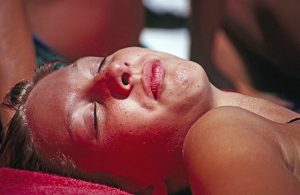 In the USA we prefer to take in every ray of sunshine. What we unfortunately sometimes want to forget is to smear ourselves with sunscreen. And that while the sun can be extremely harmful. Therefore, it is necessary to protect yourself from the sun. But which protection factor do you need? And how often should you apply yourself? We tell you everything you need to know about sunburn.
 Prevent premature skin aging
 Sun rays consist of UVA and UVB rays. The ‘A’ in UVA stands for ‘aging’. UVA radiation is the culprit when it comes to (premature) skin aging. The ‘B’ in UVB stands for ‘burning’. UVB radiation causes your skin to discolour in the sun, but it can also cause you to burn. The acronym SPF stands for ‘Sun Protection Factor’ and only says something about how long you can be exposed to UVB radiation without burning. The higher the protection factor, the longer you can stay in the sun without burning. A sunscreen with SPF therefore offers protection against sunburn, but not against skin aging.
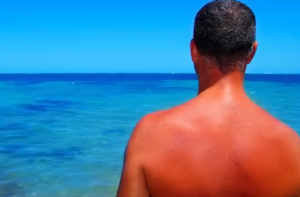 Children’s skin is extra sensitive to the sun and therefore needs more protection. Use at least SPF 30 for children. Keep children under one year out of the sun. In this article you can read more about sun protection in children .
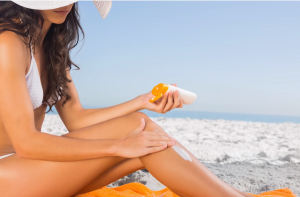 Appeared, but still burned? Can happen. Aftersun provides cooling and restores the moisture balance of your skin. Want to know more about after sun and how you can prevent scalding? Then read the article about after sun .